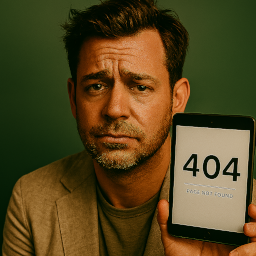
Eric Ries wrote "...if the fundamental goal of entrepreneurship is to engage in organization building under conditions of extreme uncertainty, its most vital function is learning." (The Lean Startup, p38) My high school basketball coach put it differently: "Losing is learning". As we close another year and another company, we once again examine what we've learned. In no particular order
No one will sign your NDA.
I know they say that "Ideas are nothing, Execution is everything", but my idea is REALLY something special. It's just so good that anyone hearing it will want to steal it. Although it's the cornerstone of my billion-dollar baby, I'm not quite ready to spend a few thousand dollars on copyrights and patenting the idea. I just need one VC who's willing to entertain my pitch and take on the risks of getting sued for independently becoming subsequently involved in a vaguely similar proposal.
Why does everyone assume I'm the litigious one for asking? Also, just because it's so easy to copy that literally anyone who hears the idea could execute it better than me, doesn't mean it's not a copyrightable trade secret. That just means I'm smart and never going to share it with the developers and investors whose help I require to execute.
Tax-loss harvesting
Everyone knows losses on one investment can be used to offset profits from another. This is a great strategy for reducing taxes. Since I'm only halfway there without a profitable business, I've pivoted to a new strategy. Similar to carbon-offsets where companies sell CO2 credits to help airlines and power producers to become net neutral on emissions; I sell failed ventures to profitable companies for a share of their tax savings.
I call it PIVOTAL: Profitable Investment Ventures Own Tax Allocation Losses. It's a win-win for losses. I have quite a catalog of ventures available. Six were founded this year alone. DM me for a list of options and the approximate amount of money you'd like to lose/offset.
California is a Two-Party State
Apparently, California is a "Two-Party State" with regard to recording conversations. This applies more generally than just an entrepreneurial lesson. Let's just say you (or not you, but someone associated with your company) hypothetically promised an investor a "guaranteed return" or offered an "Iron-clad promise" to 5X their money. For the sake of argument, such statements would be inadmissible in legal proceedings if the alleged conversation were surreptitiously recorded.
Who among us hasn't slightly stretched the truth with friends and family about "can't miss" investments when asking them to mortgage their homes? As long as the audio recording isn't admissible and/or the fine print of the contract disclaims any such promises, every savvy investor knows startups have risks.
Per LinkedOnion Terms of service, this post is not legal advice even if I say: "wink, wink" or the emoji equivalent.
;) ;)
A word of caution which is not legal advice, but for informational and educational purposes only (unless you pay for our advice and we repeat this): by common-law a single wink is generally considered to negate the veracity of a statement. However, various jurisdictions differ in interpretations of the double wink as either a) an emphasis of the initial negation or b) a double negative re-establishing the original premise.
States' Rights issues arose after the landmark federal case of Cyclopian v Winken, Blinken & Nod, LLC. Although the court ruled against the Defendant for interpreting a blink by a person wearing an eyepatch as a non-verbal verbal contract, the appeals court left open the door for states to determine the binding nature of facial expressions according to the three pronged test of:
All of that is to say, be careful in your interpretation of "wink, wink". The double emoji has yet to be tested in Federal Court, but we'd love to represent you in the event you are sued for its use. This is not a solicitation in case you already have legal counsel. {wink}